Atlassian Modernizes Global Observability Infrastructure by Migrating to OpenTelemetry at Scale

For nearly a decade, Atlassian relied on gostatsd, an open-source StatsD implementation, to power its massive telemetry pipeline. Operating across 14 global regions and handling metrics from approximately 100,000 hosts, the legacy infrastructure maintained a 99.95% service-level objective (SLO) with minimal latency. However, as the industry converged on OpenTelemetry (OTel) as the unified standard for observability, Atlassian’s engineering teams faced an mounting technical debt. Maintaining a bespoke, UDP-only pipeline that lacked native support for traces and logs became increasingly unsustainable. On September 17, 2026, Atlassian engineers Iris Grace Endozo, Farzad Vazirnia, and Albert Kerr detailed the comprehensive, multi-stage migration strategy that allowed the company to pivot to an OpenTelemetry-based architecture without disrupting critical service operations.
The Architecture of the Legacy Pipeline
The legacy system was a testament to the reliability of simple, purpose-built infrastructure. Gostatsd functioned as a sidecar on every host, while a centralized aggregation tier processed incoming metrics. For years, this architecture remained largely invisible to developers, which is often considered the hallmark of a successful internal platform. However, the ecosystem surrounding observability shifted rapidly. As more internal services and third-party tools began emitting data in the OpenTelemetry format, Atlassian found itself in a "race it could not win"—constantly building custom bridges to translate modern OTel data into the older gostatsd-compatible format.
The primary hurdle for the engineering team was not the theoretical benefit of OpenTelemetry, but the sheer scale of the implementation. With observability logic embedded into thousands of services, a "big bang" migration—tearing out the old pipeline and forcing every team to re-instrument their services simultaneously—was deemed a logistical impossibility. Such a move would have risked significant downtime and the loss of critical data used for automated alerting.
Strategic Execution: The Interface Preservation Approach
Atlassian’s engineering leadership adopted a "swap the engine, keep the interface" philosophy. By maintaining the existing StatsD-over-UDP interface, the team effectively decoupled the migration from the application development lifecycle. Service owners could continue sending metrics using their existing configurations, while the platform team focused on replacing the "middle layer" of the pipeline.
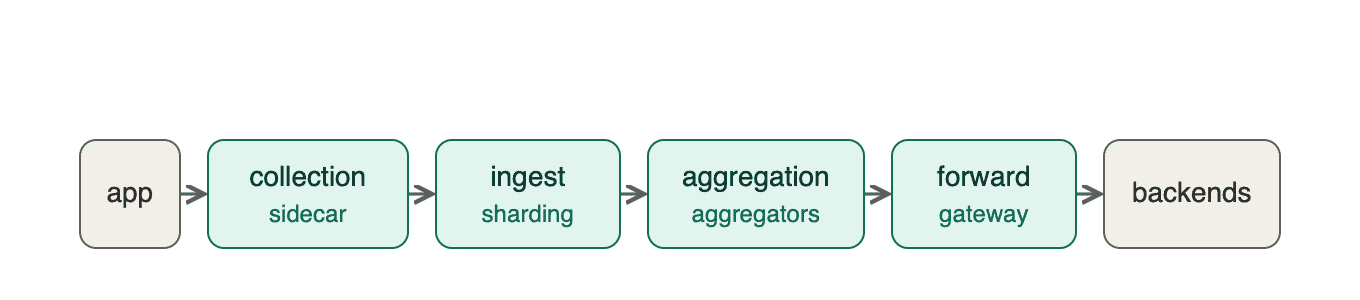
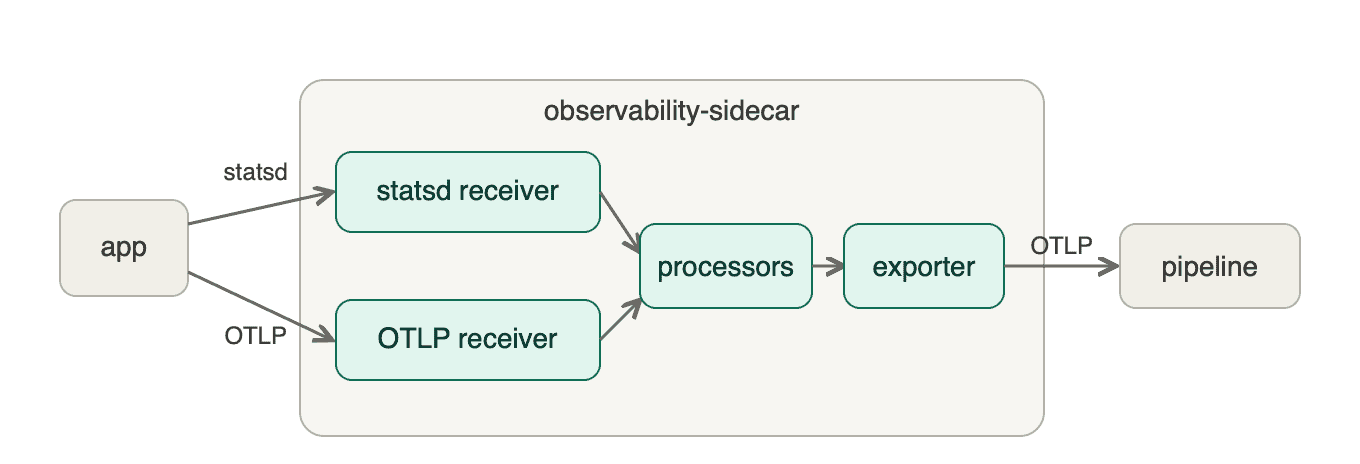
This strategy transformed a high-risk, company-wide migration into a focused platform-engineering initiative. To ensure success, the team deployed purpose-built OpenTelemetry Collector distributions across four distinct stages: collection, ingest, aggregation, and forwarding. By modularizing the pipeline, engineers were able to iterate on individual components without affecting the rest of the stack. Crucially, the collection-side was updated to support both StatsD and OTLP (OpenTelemetry Protocol) simultaneously, allowing for a phased transition rather than a hard cutover.
Chronology and Technical Milestones
The migration followed a disciplined, step-by-step methodology:
- Phase One: Streamlining Collection. The team replaced the gostatsd sidecar with an OTel Collector distribution. Because the Atlassian tracing team had already successfully deployed the OTel Collector for years, the organization had a proven "proof of concept" regarding production readiness at scale. This change alone allowed for the consolidation of multiple sidecars, reducing CPU consumption by approximately 3.9% per service across the company’s "Micros" platform.
- Phase Two: Intelligent Ingest. Historically, Atlassian used a custom proxy named "nomad" to handle hashing for metrics aggregation. This system suffered from "hot shard" issues, where metrics from high-traffic services overwhelmed specific aggregation instances. By adopting the OTel Collector’s
loadbalancingexporter, the team shifted to stream-ID-based hashing. This ensured that individual time series were distributed evenly across the shard pool, resulting in a more predictable autoscaling behavior and significantly reduced latency. - Phase Three: Optimized Aggregation. Atlassian handles roughly 4.8 billion data points per minute, distilling them down to 220 million for long-term storage—a reduction of 96%. To maintain this efficiency, the team developed a custom delta aggregation processor, which they subsequently open-sourced under the
atlassian-labsGitHub repository. This custom component enabled the new pipeline to run on roughly half the CPU resources previously required. - Phase Four: Unified Forwarding. The final stage replaced the bespoke internal forwarder with a stateless metrics-gateway based on upstream OTel exporters. This enabled the team to leverage community-supported features like native retries, queuing, and backpressure, making the addition of new data destinations a configuration task rather than a software engineering project.
Supporting Data and Efficiency Gains
The economic impact of the transition is substantial. Prior to the migration, the legacy gostatsd aggregators and the "nomad" proxy accounted for roughly 38% of CPU requests within Atlassian’s metrics clusters. Nomad alone represented 13% of total resource utilization. By eliminating these custom components and shifting to a standardized OpenTelemetry model, Atlassian realized significant infrastructure cost savings.
Furthermore, the shift to OTel provides the company with a single, unified codebase for observability. Engineers no longer need to build custom services for new telemetry requirements; they simply write or configure existing OTel components. This reduces the cognitive load on platform teams and shortens the time-to-market for new observability features.
Industry Context and Broader Implications
Atlassian’s migration highlights a broader trend within the Cloud Native Computing Foundation (CNCF) ecosystem. As OpenTelemetry matures, large-scale enterprises are increasingly abandoning legacy, vendor-specific, or bespoke telemetry pipelines in favor of the standardized, vendor-neutral OTel framework.
For many organizations, the primary barrier to adopting OpenTelemetry is the perception of complexity. However, Atlassian’s success demonstrates that by utilizing the OTel Collector’s modular design, organizations can modernize their infrastructure incrementally. The fact that Atlassian opted to open-source its custom delta aggregation processor serves as a indicator of the company’s intent to contribute back to the OTel community, a practice that is becoming increasingly standard for major technology firms.
Future Roadmap: Shifting Left
With the core pipeline modernization complete, Atlassian’s focus has shifted to "shifting left." The next objective is to move application instrumentation directly onto the OpenTelemetry SDK. This will involve phasing out the various legacy client libraries—such as DogStatsD and other bespoke StatsD implementations—that the company has supported for years.
By migrating to native OTel instrumentation, Atlassian aims to unlock advanced observability features, including distributed tracing and automated log correlation, which were previously difficult to implement within the constraints of the legacy pipeline. The company also intends to explore further integrations within the OpenTelemetry ecosystem to address remaining large-scale challenges, leveraging the collective innovation of the global open-source community.
In summary, the migration represents a pivotal shift in Atlassian’s engineering philosophy. By prioritizing interoperability and community-driven standards over internal "reinvention," the company has built a sustainable foundation that is not only more cost-effective but also capable of scaling to meet the demands of its diverse, multi-region service environment for years to come. The success of this transition provides a blueprint for other enterprises grappling with the technical debt of legacy monitoring systems in an increasingly cloud-native world.
Related posts: